
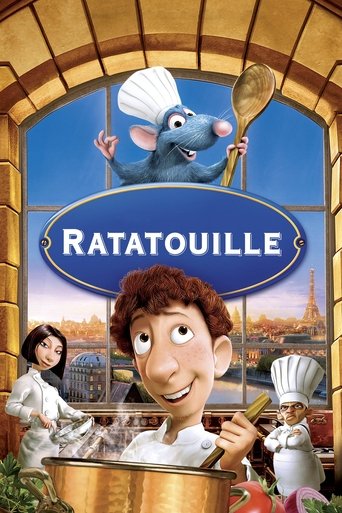
Ratatouille

Is Ratatouille right for your family?

Movie 2007 111 min Analyzed with methodology v1.1.0 — can be updated

Remy, a rat, possesses a palate far more refined than that of his fellow comrades. He dreams of becoming a chef, one who creates rather than scavenges. When fate deposits him in the sewers beneath one of Paris’s most famous restaurants, he finds himself ideally placed to fulfill his dream. Forming an unusual alliance with a hapless young kitchen worker, Remy begins a daring culinary double life. As Remy pursues his vision, he must navigate the suspicions of the calculating Head Chef Skinner, the disapproval of Remy’s own colony, and the foreboding presence of renowned food critic Anton Ego, who strikes fear in the hearts of chefs all throughout France.

What's inside

  • ViolenceTraces · 24
    Why this score?
    • 0:00–3:00A rat is chased through a kitchen by a woman wielding a gun, resulting in property damage as the rat flees.mild
    • 30:00–32:00A confrontation occurs in a restaurant kitchen involving pushing, shoving, and physical altercation between multiple characters.clear
    • 35:00–36:00A character is threatened with violence by another character during a tense interaction.mild

    Sample of identified scenes. Neutral descriptions, written by Zelari.

  • Sexual contentAbsent · 0
  • Romance & relationshipsPresent · 27
    Why this score?
    • 70:00–72:00A young male chef and a female chef interact with mutual interest and friendly banter while working together in the restaurant kitchen.mild
    • 90:00–92:00A young male chef and a female chef share a moment of connection and chemistry while collaborating on cooking tasks.clear

    Sample of identified scenes. Neutral descriptions, written by Zelari.

  • Religion & spiritualityAbsent · 0
  • Family themesPresent · 35
    Why this score?
    • 0:00–0:15Remy's relationship with his father, the colony leader, is established as contentious due to their differing values and life goals.clear
    • 30:00–31:40Remy's decision to leave his rat colony and family behind to pursue his ambitions in the restaurant is a central plot point.clear
    • 40:00–43:20Remy's relationship with his brother Emile is portrayed as a sibling dynamic with differing personalities and interests.clear

    Sample of identified scenes. Neutral descriptions, written by Zelari.

  • Political & social messagingPresent · 27
    Why this score?
    • 0:00–1:51The narrative presents a critique of class barriers and assumptions about merit based on social status, showing that capability and talent are not determined by birth or species.clear
    • 0:00–1:51The story depicts tension between individual aspiration and family/community expectation, exploring whether one should pursue personal ambitions or conform to group identity.clear
    • 0:00–1:51The film includes a subplot about institutional corruption within restaurant business practices, represented through the antagonist's exploitation of workers and misrepresentation of ownership.mild

    Sample of identified scenes. Neutral descriptions, written by Zelari.

  • Heavy emotional contentPresent · 39
    Why this score?
    • 0:00–5:00Remy is separated from his rat colony and becomes lost in the Paris sewers after being washed away by water.mild
    • 30:00–35:00The restaurant faces potential closure and financial ruin, creating sustained tension around whether it will survive.clear
    • 70:00–75:00Anton Ego's impending restaurant visit generates anxiety among the kitchen staff about their professional reputation and the restaurant's future.clear

    Sample of identified scenes. Neutral descriptions, written by Zelari.

Re-analyze

Where themes appear

0 min111 min
Violence
Sexual content
Romance & relationships
Religion & spirituality
Family themes
Political & social messaging
Heavy emotional content

Approximate position of each scene across the runtime.

Representation (informational)

Shown for information only — never used as a filter.

  • Female protagonism
  • Cast diversity
  • LGBTQ characters present

Scores measure theme presence (0–100) — they never say whether content is good or bad. Different families have different thresholds.